
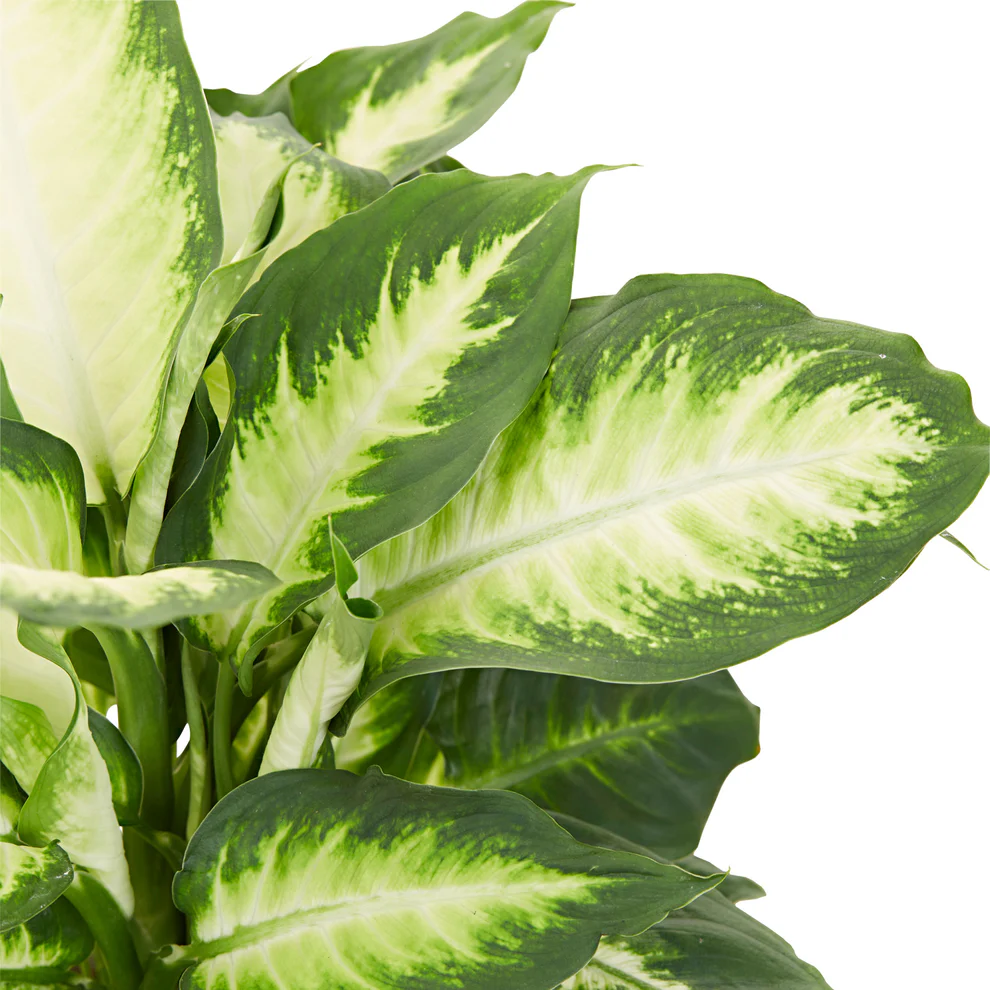
Image source: Internet (Please contact us if you find any copyright infringement)
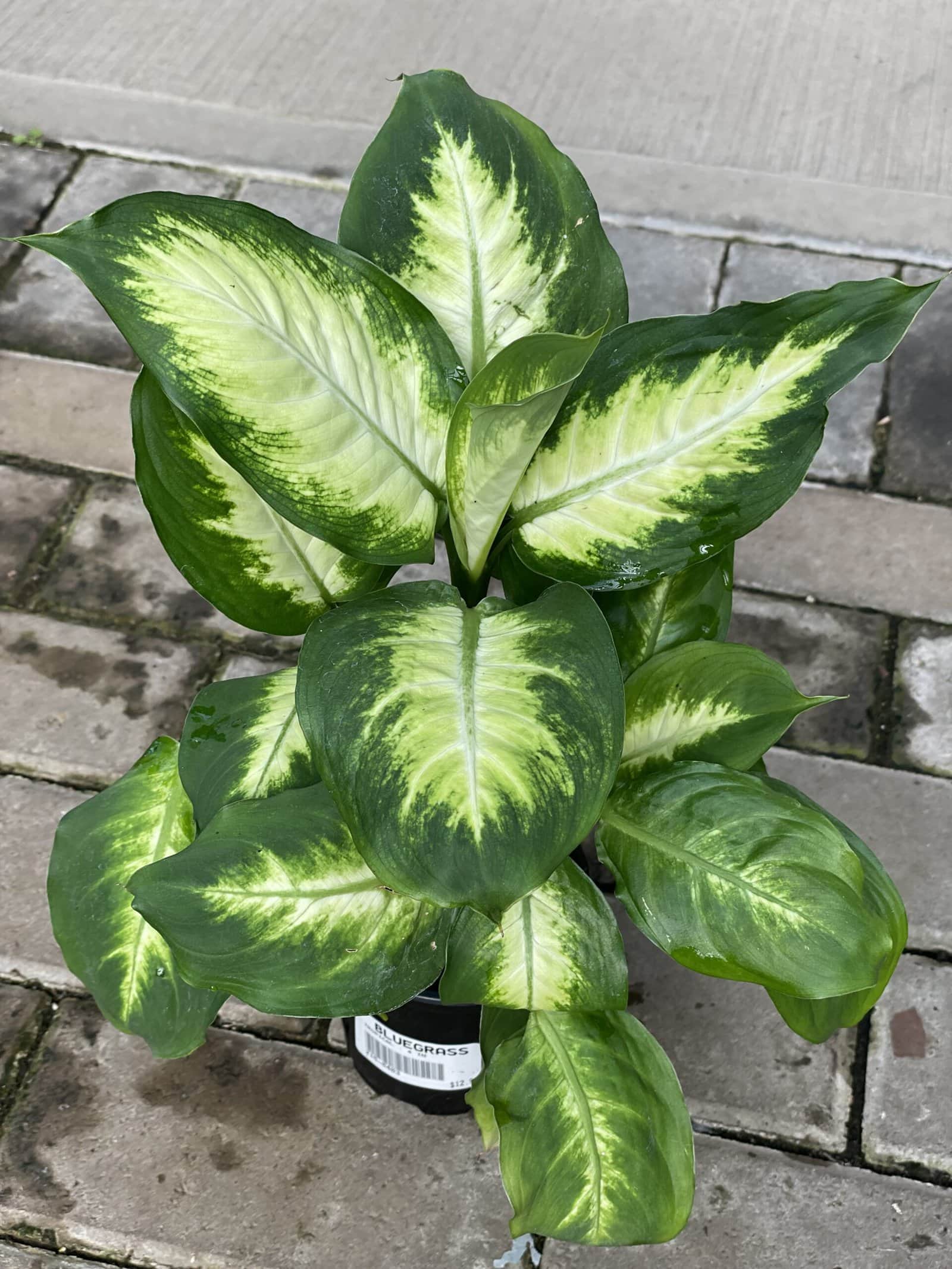
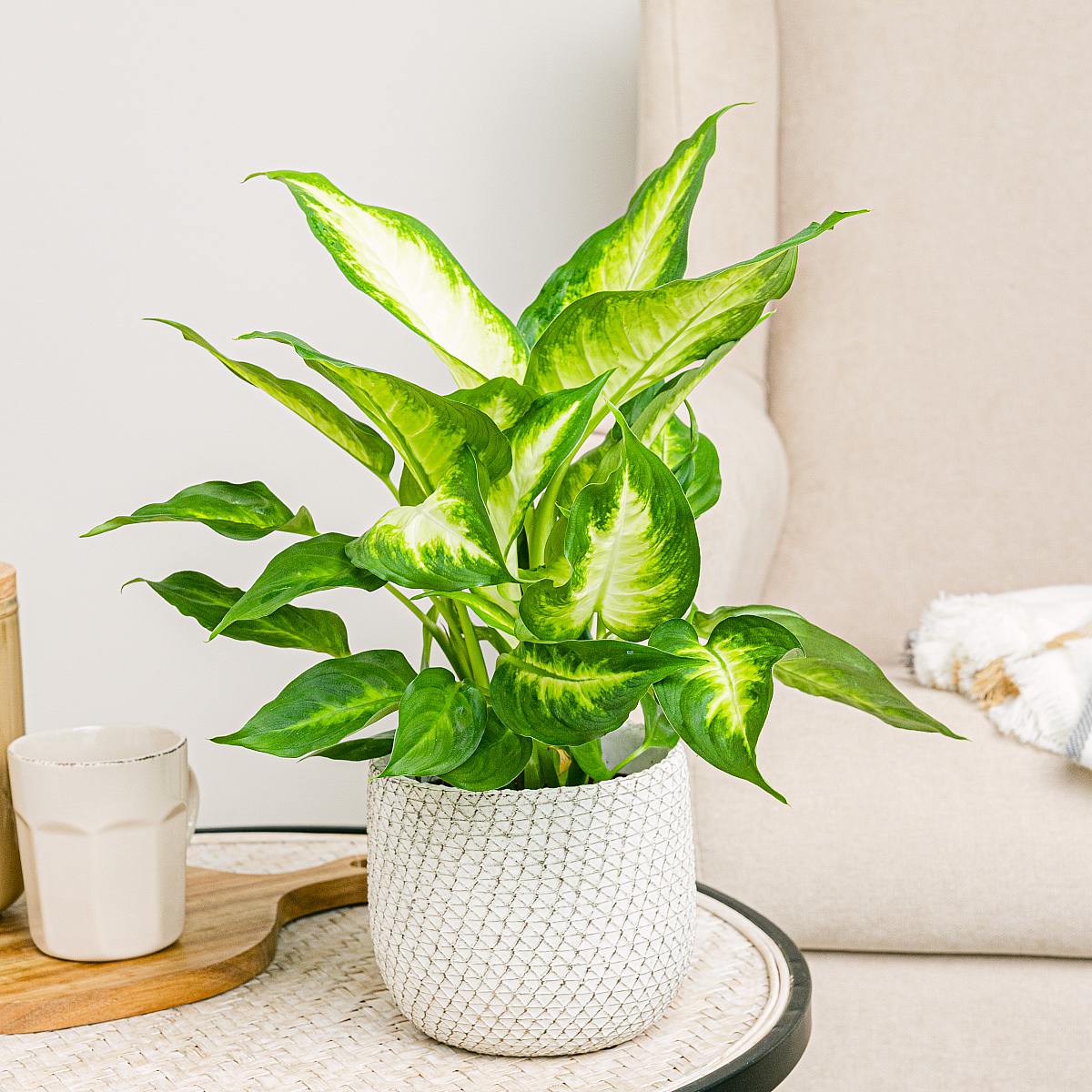
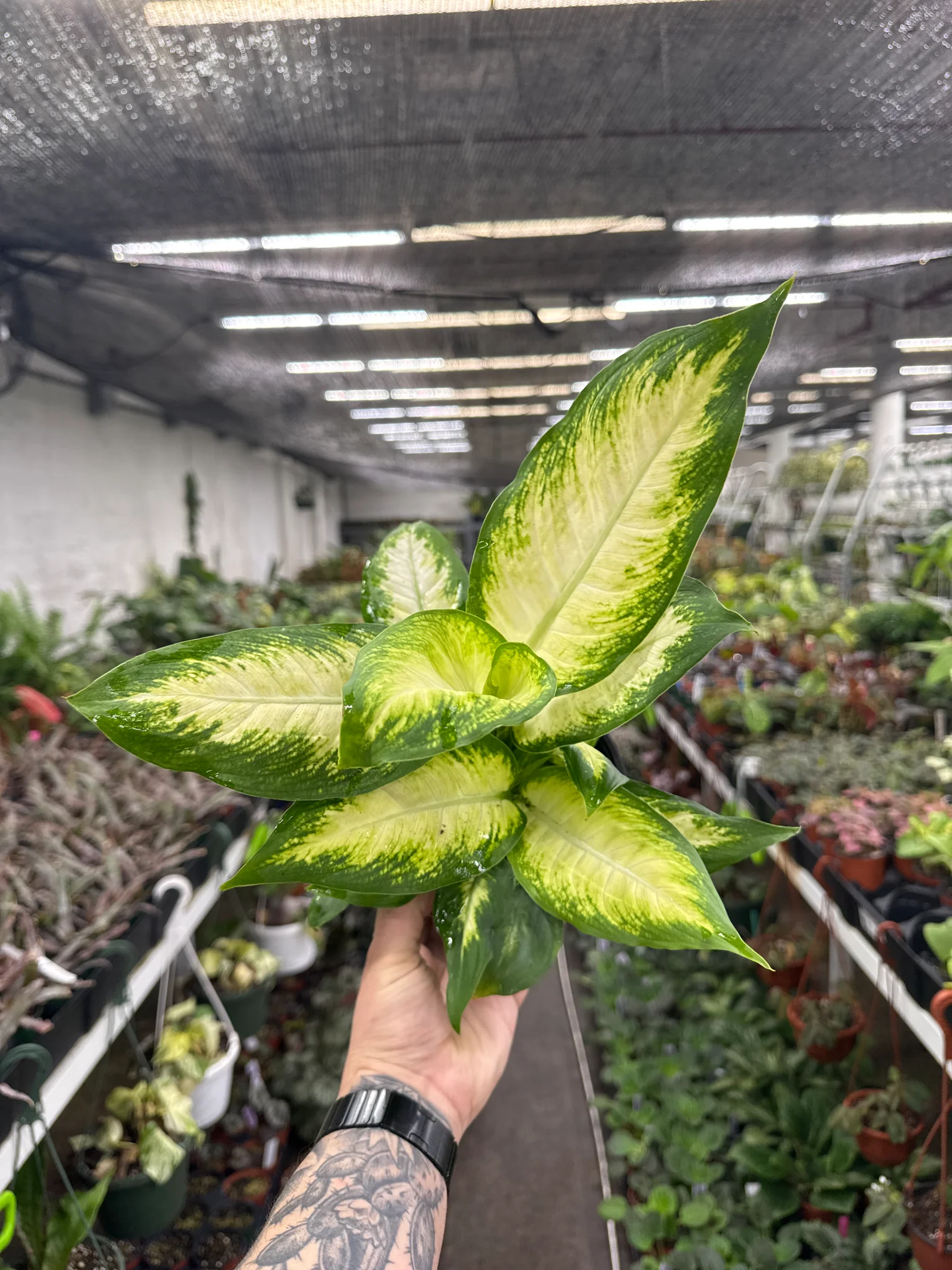
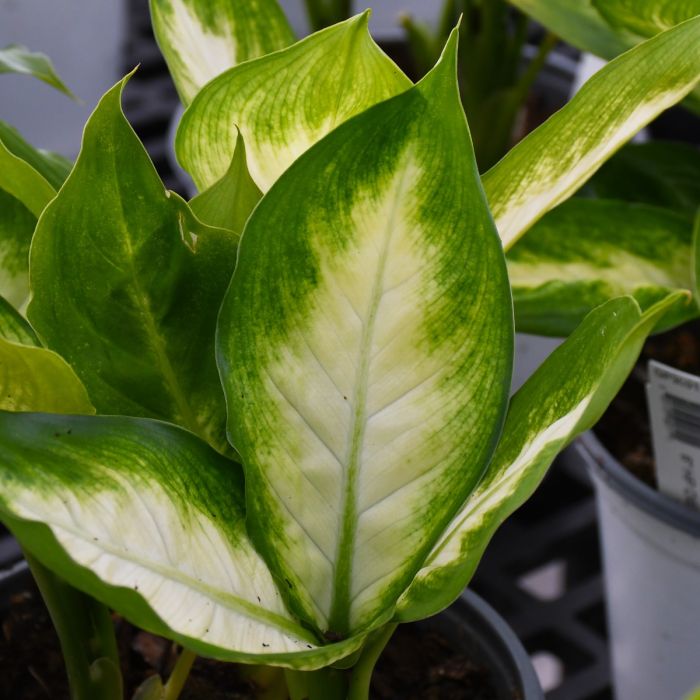
Dieffenbachia Camille
| Surname | Araceae |
|---|---|
| Leaf color | green |
| Leaf shape | oval |
| Tăng trưởng | trung bình |
| Breeding | cuttings, separating young plants |
| Diseases & Pests | Red spider mites, mealybugs, root rot |
Camille is one of the most classic and recognisable Dieffenbachia varieties. The strong contrast between the light cream centre and the dark green margins creates an elegant, radiant look that will brighten up any interior space.
Note: The above information is only relative, the living conditions of the tree also depend a lot on other objective factors.
How to grow and care for Dieffenbachia Camille
Dieffenbachia Camille Growing Difficulty
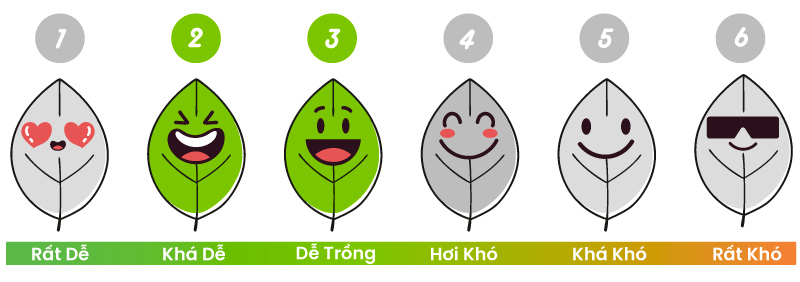
Difficulty: 2-3/6
Dieffenbachia is a fairly easy plant to grow, suitable for beginners. However, there are a few points to keep in mind to keep the plant healthy:
✅ Sensitive to overwatering, very susceptible to root rot.
✅ Cannot withstand sudden cold temperatures.
✅ Leaves may burn if exposed to direct sunlight.
Soil for growing Dieffenbachia Camille
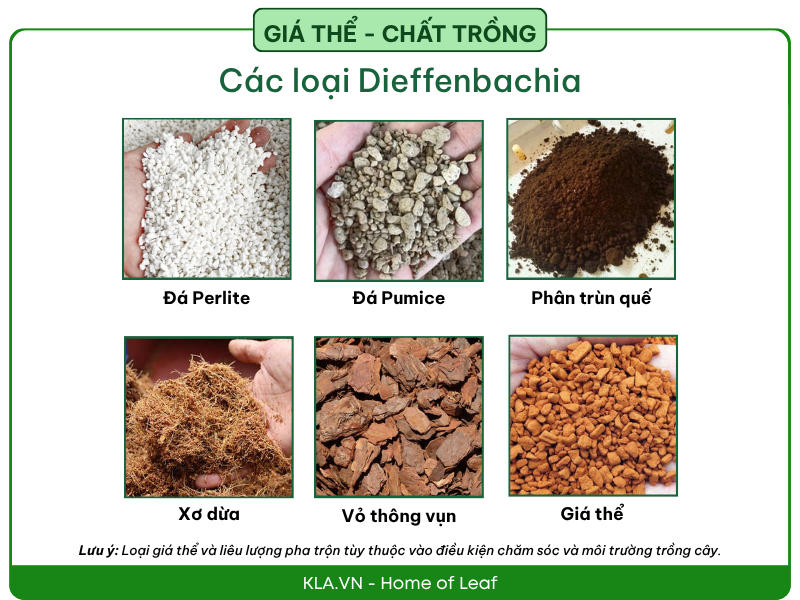
Dieffenbachia plants require extremely well-draining soil to prevent root rot, while still retaining a certain level of moisture.
The ideal soil mix should be loose enough to allow the roots to have adequate air circulation.
📌Popular Dieffenbachia Soil Formula:
✅ 2 Potting mix for indoor plants
✅ 1 part perlite or pumice stone (helps with drainage and aeration)
✅ 1 part coconut fiber or shredded pine bark (retains moisture, creates a fluffy texture)
✅ (Optional) A little charcoal or vermicompost (to supplement beneficial microorganisms and nutrients)
🚫 Avoid using undiluted garden soil because it tends to compact easily, retaining water for too long, which can suffocate and rot Dieffenbachia roots.
💡 Note:
- If you are growing Dieffenbachia in pots, make sure there are large drainage holes at the bottom of the pot.
- Apply slow-release fertilizer or organic fertilizer (worm castings, fish fertilizer) regularly every 4-6 weeks during the growing season (spring, summer). Reduce or stop fertilizing in winter.
Suitable light for Dieffenbachia Camille

🔆 Indirect light, medium to strong (Bright, Indirect Light) is best!
📌 Lighting details:
✅ Best: Place near a window with curtains, where there is plenty of light but no direct sunlight.
✅ Can withstand: Low light, but the plant may grow slowly, the leaves lose their characteristic pattern and the stem becomes long and weak.
✅Avoid: Strong direct sunlight (especially midday and afternoon), as this can burn the leaves, causing dry brown spots.
💡 Note:
- If the leaf patterns fade, it is a sign that the plant needs more light.
- If placed in a dark room, you can use LED plant lights (grow light) specialized, placed about 30-60cm away from the plant and exposed to light for 10-12 hours/day to support photosynthesis.
📍 Ideal location in the house:
- Near the window Winter to welcome the gentle morning sunshine.
- If the window faces West or South, it is necessary to leave a distance of 1-2m from the window or have a curtain to filter strong light.
Suitable temperature for Dieffenbachia Camille
🌿 Ideal temperature for Dieffenbachia plants: 18 - 27°C
Dieffenbachia plants prefer warm climates with stable temperatures and are very sensitive to sudden temperature changes.
📌 Notes to keep plants healthy:
✅ Avoid drafts and direct airflow from air conditioners, as this can cause thermal shock and dry out the plant's leaves.
✅ Do not leave the plant outdoors if the nighttime temperature drops below 15°C.
📍Signs of plants affected by temperature:
🚫 Too cold: The leaves turn yellow, become soft and fall off. The plant stops growing.
🚫 Overheating: Leaves wilt even when the soil is still moist, and leaf edges may dry out and scorch.
Water for Dieffenbachia Camille plants
 Water the plants when the topsoil layer, about 2-5 cm thick, is completely dry.
📌 Watering principles:
✅ Water slowly until water begins to drain out of the drainage hole at the bottom of the pot. This ensures that the entire root system is hydrated.
✅ Always use your finger or a wooden stick to check the soil moisture instead of watering according to a fixed schedule.
✅ Reduce watering in winter when the plant enters a dormant phase and is less active.
🚫 Avoid overwatering, as this can easily cause root rot and kill the plant. Signs of this include yellowing of the lower leaves, a soft stem, and an unpleasant odor.
📍How many times a week to water?
- Hot season/growing season: 1/week.
- Cold season/holiday season: 10-14 days/time.
Humidity for Dieffenbachia Camille
 Dieffenbachia thrives in medium to high humidity environments (around 50-70°C). However, most common varieties can adapt to normal indoor humidity. If the air is too dry (especially in air-conditioned rooms), the leaf edges may turn brown and dry out.
📌 How to maintain proper humidity:
✅ Use a humidifier.
✅ Place the plant pot on a tray of pebbles filled with water (making sure the bottom of the pot is not submerged) to increase the humidity around it.
✅ Plant trees in groups so they can naturally create a humid environment around themselves.
✅ Place the plant in the bathroom or kitchen if there is enough light.
Ideal pH for Dieffenbachia Camille

Dieffenbachia plants thrive best in soil with a slightly acidic to neutral pH (6.0 - 7.5).
🌿 If the soil pH is too low (below 5.0), plants may have difficulty absorbing certain nutrients.
🌱 If the pH is too high (above 7.0), the plant may lack micronutrients, leading to yellow leaves.
Pet-friendly
Dieffenbachia (Dieffenbachia) is not friendly to pets (dogs, cats) and humans. If you plant the plant, you need to take careful measures to protect the plant. 🚧🐕🐈
💡 Additional notes:
💡 Wipe leaves: The large leaf surface of the plant easily collects dust, hindering photosynthesis. Use a damp cloth to gently wipe 1-2 times/month to keep the leaves clean and shiny.
💡 Rotate the pot: Dieffenbachia tends to grow towards light sources, so you should rotate pot 90 degrees periodic per week for balanced plant growth.
💡 Pests and diseases: Look for mealybugs and spider mites on the underside of the leaves. If you find them, you can wipe the leaves with a diluted soap solution or neem oil.
💡 Breeding: It can be propagated by cuttings of stem segments (about 5-10 cm long, with at least one dormant bud) in water or moist soil.
💡 Repotting: Only repot when the roots have filled the old pot (usually every 1-2 years). Choose a new pot that is 2-4cm larger in diameter than the old one.

Indoor Plant Care Guide
The most important and basic knowledge about growing plants indoors:
Content is subject to content moderation by Long Hồ – Founder, Senior Plant Copywriter, Gardener
Learn about Chính sách biên tập From KLA Garden. You can contact us to write articles or create content; payment will depend on the quality of your content. Contact Long Ho: hofilong@gmail.com.