










Image source: Internet (Please contact us if you find any copyright infringement)
Aglaonema ‘Red Siam’
| Surname | Araceae |
|---|---|
| Leaf color | Tâm lá màu đỏ hồng rực rỡ hoặc đỏ tía; viền lá và gân chính màu xanh lục đậm. |
| Leaf shape | Lá hình trứng rộng, bản lá dày, mọc hướng lên trên tạo dáng cây gọn gàng. |
| Roots & Tubers | turn the earth |
| Breeding | cấy mô, cutting, tách bụi |
| Tăng trưởng | trung bình |
| Diseases & Pests | nhện, rệp, thối rễ |
Aglaonema ‘Red Siam’ (Vạn Lộc Đỏ) thu hút mọi ánh nhìn với sắc đỏ rực rỡ bao phủ tâm lá, bao quanh bởi đường viền xanh lục đậm sắc sảo. Cây không chỉ là điểm nhấn sang trọng cho nội thất mà còn tượng trưng cho sự thịnh vượng, tài lộc và năng lượng tích cực cho gia chủ.
Note: The above information is only relative, the living conditions of the tree also depend a lot on other objective factors.
Cách trồng và chăm sóc Aglaonema ‘Red Siam’
Độ khó trồng cây Aglaonema ‘Red Siam’

Difficulty: 2-3/6
Cây Aglaonema ‘Red Siam’ phù hợp với người có ít kinh nghiệm vì:
✅ Easy to adapt to indoor environment
✅ No need to water regularly
✅ Easy to propagate from cuttings with aerial roots
Soil for planting cây Aglaonema ‘Red Siam’
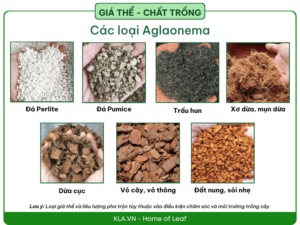
Aglaonema cần giá thể thoát nước tốt và giữ độ ẩm vừa đủ
📌 Recommended soil formula:
✅ 1 part humus or light loam
✅ 1 part coconut fiber/peat moss
✅ 1 part perlite or burnt rice husk
✅ 1 part rotten bark or pumice
🚫 Do not use soil that retains water for a long time or is compacted.
Suitable lighting for cây Aglaonema ‘Red Siam’

📌 Details about the light:
✅ The best: Place the plant near the window East or West, where there is diffuse light. Can be used sheer curtains to reduce direct sunlight intensity.
✅ Can bear: The light is weaker for a short time, but leaves will shrink, light color và slower growth rate.
🚫 Absolutely avoid:
-
Direct sunlight, especially at noon, can cause leaf burn, appear dry brown spots on the edge of the leaf.
-
Do not place close to glass doors without curtains if the house faces South or Southwest.
💡 Special Note:
-
If new leaves come out small, distorted or deformed, the plant may be lacking light.
-
If you have to place it in a dark place (like a room without windows), you can use LED grow light đặt cách cây khoảng 30–45 cm và chiếu sáng 10–14 tiếng mỗi ngày.
📍 Ideal location in the house:
-
Near the window there is light curtains or light filters.
-
If the window south, place the tree about 1–1.5 meters away from the window or use curtains to diffuse light.
-
Do not place near hot light sources (such as halogen bulbs) that cause heat.
Temperature suitable for cây Aglaonema ‘Red Siam’

🌿 Nhiệt độ lý tưởng cho cây Aglaonema ‘Red Siam’ : 18 - 27°C
📌 Characteristic:
-
Là loài cây nhiệt đới, Aglaonema ‘Red Siam’ thích khí hậu warm, humid.
-
Cold intolerance or sudden temperature changes.
🚫 Nhiệt độ dưới 15°C can cause the plant to be heat shock, leaves drooping, yellow or shed.
🚫 Nhiệt độ quá cao (>29°C) but not enough moisture also makes leaves wither quickly, appear brown burn.
📌 Note for healthy plant growth:
✅ Avoid strong drafts, especially wind from air conditioning, high-powered fans or open windows at night.
✅ Do not place plants close to heater, kitchen, where temperatures fluctuate widely.
✅ On hot days, you should increase moisture by: Place the pot on a tray of water with pebbles, spray a light mist on the leaves early in the morning or use a humidifier if the room is regularly air-conditioned.
📍 Signs of plants affected by temperature:
🚫 Too cold:
-
Leaves droop, soften, turn yellow.
-
Roots do not absorb water even when the soil is moist.
🚫 Too hot & dry:
-
The leaves are withered but the soil is still moist.
-
The edges of the leaves are dry, brittle and curled inward.
Water give tree Aglaonema ‘Red Siam’

Aglaonema yêu cầu giá thể ẩm nhẹ nhưng không úng, để tránh bệnh chết rễ và lá ngả vàng
📌 Watering principles:
✅ Deep irrigation until water flows out of the bottom of the pot to ensure the lower roots are also well watered.
✅ Check soil moisture before watering by poking your finger into the top 2–3cm of soil or using a moisture tester. Water only when the soil begins to dry out on the surface.
✅ Reduce watering frequency in cold season or when the plant is slow growing. In winter, water only when the soil is completely dry.
🚫 Avoid over watering – recognizable signs are Leaves turn pale yellow, become limp, or mold appears on the ground, indicating that the roots are waterlogged and at risk of rotting.
📍 How many times a week to water?
- Mùa Xuân – Hè (sinh trưởng mạnh): khoảng 1 lần/tuần, hoặc mỗi 7–10 ngày .
- Mùa Thu – Đông: giảm còn 10–14 ngày/lần, hoặc lâu hơn nếu đất giữ ẩm .
- Điều chỉnh tùy thông số môi trường (ánh sáng, nhiệt độ, độ ẩm, kích thước chậu).
Humidity give cây Aglaonema ‘Red Siam’

Aglaonema có nguồn gốc từ rừng ẩm nhiệt đới, ưa ẩm cao (Khoảng 60–70% RH)In dry or air-conditioned conditions, plants may be susceptible to leaf margin burn, leaf curl or slow growth.
📌 How to maintain proper humidity:
✅ Mist lightly daily, especially in the morning – helps increase humidity but should not make the leaves too wet in the evening to avoid fungus.
✅ Place the plant on a pebble tray with water., the evaporating water will create micro humidity around the plant pot.
✅ Use a humidifier in a closed room or when using air conditioning regularly.
✅ Planting tropical plants to create a natural microclimate effect with higher humidity around the foliage.
Ideal pH give cây Aglaonema ‘Red Siam’

Aglaonema ‘Red Siam’ sinh trưởng tốt trong môi trường đất có độ pH slightly acidic to neutral, specifically in the range 5.5 – 6.5.
🌿 If Soil pH is too low (below 5.5), the tree can difficulty absorbing essential nutrients, especially calcium (Ca) và Magnesium (Mg)This can result in weak leaves, yellow leaf edges or premature necrosis.
🌱 If pH đất quá cao (trên 6.5), susceptible plants iron deficiency (Fe) – causing the condition Young leaves turn yellow but leaf veins remain green (yellowing disease due to iron deficiency). Plants may also have poor uptake of micronutrients such as manganese (Mn) and copper (Cu), slowing growth.
💡 Care Tips:
-
You should use a soil pH test kit every 1-2 months to monitor the pH level.
-
If pH is too low: Can add more dolomite lime into the soil to slightly raise the pH.
-
If pH is too high: Can mix more rotted sawdust, compost, or sphagnum moss to lower pH naturally.
Pet-friendly

Aglaonema ‘Red Siam’ chứa needle-like calcium oxalate crystals – a compound that causes strong irritation in the mouth, throat and digestive system of dogs, cats and other pets if they chew on the leaves or stems.
⚠️ Symptoms when pets eat:
-
Drooling, vomiting, difficulty swallowing
-
Mouth swelling, sore tongue, may bleed slightly
-
Loss of appetite for several hours to several days
🚧 Precautions:
-
Place the plant high up, out of reach of pets.
-
Use a cage, screen or anti-bite spray if you have curious cats or dogs.
💡 Lưu ý thêm cho người trồng Aglaonema ‘Red Siam’:
💡Plants can “cry” (guttation – secretion at the edge of leaves) at night if the soil is too wet or the air humidity is high, this is a normal physiological reaction.
💡The plant grows strongly towards the light, so Rotate pot 1-2 times/week to help the plant grow evenly on both sides.
💡If you see leaves brown spots, whiteflies or mold, wipe clean with diluted soap solution or pure neem oil.
💡Want breeding? Cut a piece of the body aerial roots, Later Soak in clean water or moist substrate – New roots will grow after 2–3 weeks.
💡Use coir stakes or moss poles let the plant climb – this helps the plant grow leaves are bigger, thicker and more beautiful.
Indoor Plant Care Guide
The most important and basic knowledge about growing plants indoors:
Nội dung được kiểm duyệt nội dung bởi Long Hồ – Founder, Senior copywriter
Tìm hiểu về Chính sách biên tập của KLA. Bạn có thể liên hệ để viết bài, sáng tạo nội dung, nhuận bút tùy theo chất lượng nội dung.
See more
- All
- Agave (Thùa)
- Aglaonema (Ngọc ngân/vạn lộc)
- Alocasia (Môn ráy)
- Anthurium (Hồng môn)
- Aquatic plant
- Bambusoideae (Tre trúc)
- Begonia
- Cactus
- Calathea
- Cannaceae (Dong riềng)
- Colocasia
- Cycadaceae (Vạn tuế)
- Dieffenbachia (Vạn niên thanh)
- Dioscorea
- Epipremnum
- Fern
- Homalomena
- Monstera
- Other
- Palm
- Philodendron
- Platycerium
- Rhipsalis (Xương rồng tầm gửi)
- Sansevieria (Lưỡi hổ)
- Schismatophytes
- Strelitziaceae (Thiên điểu)
- Syngonium
- Tillandsia