





Image source: Internet (Please contact us if you find any copyright infringement)
Anthurium Green Mamba
| Surname | Araceae/Aroids |
|---|---|
| Leaf color | xanh lá |
| Leaf shape | hình trái tim |
| Leaf size | nhỏ-vừa |
| Roots & Tubers | aerial roots |
| Tăng trưởng | trung bình |
| Breeding | tissue culture, cutting, pollination |
| Diseases & Pests | leaf burn, spider mites, aphids, root rot |
Anthurium Green Mamba is a hybrid between Papillilaminum X Magnificum. Green Mamba inherits the beautiful veining from Magni and the leaf shape of Papi.
Note: The above information is only relative, the living conditions of the tree also depend a lot on other objective factors.
How to grow and care for Anthurium Green Mamba
Difficulty of growing Anthurium Green Mamba
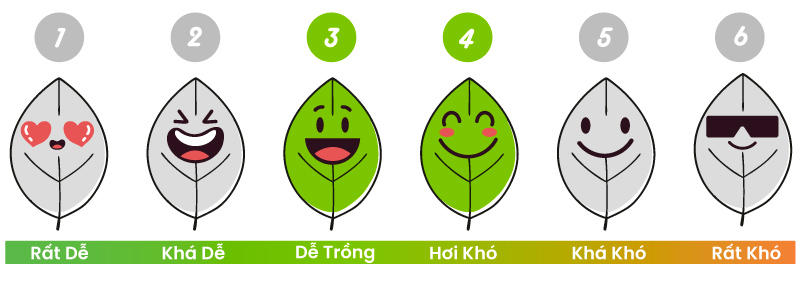
Difficulty: 3-4/6
Growing Anthurium is not too difficult, just keep in mind the following points:
✅ Requires high and stable humidity, leaves are prone to dry edges, especially with velvet leaf varieties.
✅ Root rot due to waterlogging.
✅ Responds quickly to adverse conditions but recovers slowly.
Soil for growing Anthurium Green Mamba
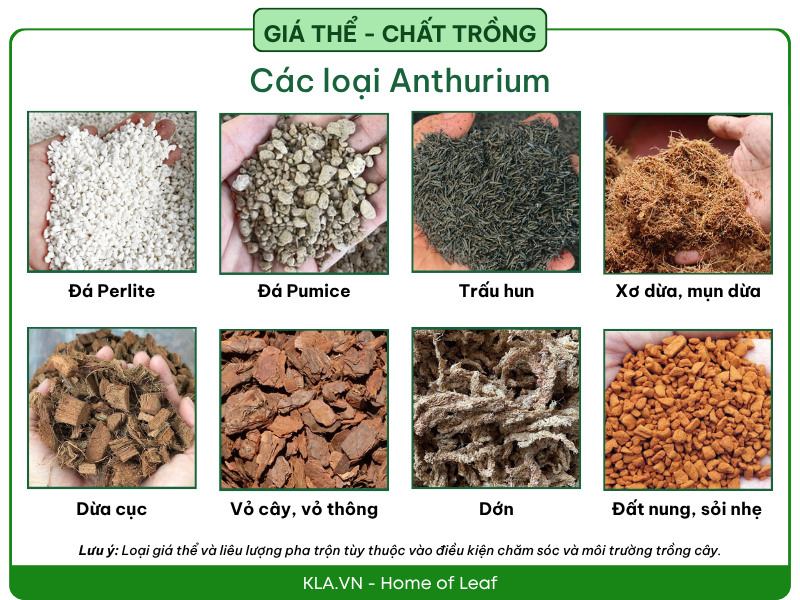
Anthurium plants require extremely loose, well-draining soil that still retains a certain level of moisture.
The ideal soil mix should have ingredients that allow the Anthurium roots to breathe and avoid waterlogging.
📌Popular Anthurium Soil Formula:
✅ 1 piece of pine bark or coconut fiber (increases aeration and retains moisture moderately)
✅ 1 part perlite or pumice stone (helps with drainage and aeration)
✅ 1 part coconut fiber or peat moss (retains moisture)
✅ (Optional) A little charcoal (for disinfection and aeration)
✅ (Optional) A small amount of burnt rice husk or vermicompost (nutrients)
🚫 Avoid compacting the soil too tightly or retaining water for too long, as Anthurium roots are very susceptible to rot.
💡 Note:
- If you're growing Anthurium in a pot, make sure there are large drainage holes at the bottom of the pot.
- Organic fertilizers (worm castings, fish fertilizer, banana extract, slow-release NPK fertilizer) can be applied periodically every 1-2 months during the growing season to promote strong plant growth. Reduce or stop fertilization in winter.
Suitable light for Anthurium Green Mamba

🔆 Indirect light, medium to strong (Bright, Indirect Light) is best!
📌 Lighting details:
✅ Best: Place near a window with curtains, where there is strong diffused light.
✅ Can withstand: Low light, but leaves may grow smaller and flowers may be less.
✅Avoid: Strong direct sunlight (especially at noon) can burn leaves, causing brown spots and yellow leaves.
💡 Note:
- If the leaves are pale, elongated, or the spots on the leaves (with spotted Anthuriums) are faint, the plant may be lacking light.
- If placed in a dark room, you can use LED plant lights (grow light) specialized for support. Place the light about 30-60cm away from the plant, shine for 10-12 hours/day.
📍 Ideal location in the house:
- Near the window Winter or North (with light curtains if the sun is strong).
- If the window faces west or south, it should be further away or have a strong light filter.
Suitable temperature for Anthurium Green Mamba plant
🌿 Ideal temperature for Anthurium plants: 18 - 27°C
Anthurium plants prefer warm climates with stable temperatures and cannot tolerate cold or sudden temperature changes.
If the temperature drops below 15°C, the plant may go into cold shock, stop growing, lose leaves or rot the roots.
📌 Notes to keep plants healthy:
✅ Avoid drafts and direct airflow from air conditioners (fans and air conditioners can dry out the leaves).
✅ Do not leave the plant outdoors in cold weather if the temperature drops below 15°C.
✅ If it's too hot (>30°C), ensure good ventilation and increase humidity by misting or placing the plant pot near a tray of water.
📍Signs of plants affected by temperature:
🚫 Too cold: Leaves turn yellow or brown, become limp, droop, and fall off.
🚫 Overheating: Leaves have dry brown spots, scorched edges, and wilt even though the soil is still moist.
Water for Anthurium Green Mamba plants
 Anthurium plants prefer consistently moist soil, but not waterlogged. The ideal watering method is to wait until the top layer of soil (about 2-5 cm) is dry before watering again.
📌 Watering principles:
✅ Deep irrigation until water flows out of the bottom of the pot, helping the roots absorb enough water.
✅ Check soil moisture before watering by poking your finger into the soil or using a wooden stick.
✅ Reduce watering in winter or when the plant is not growing well, only watering when the soil is almost completely dry.
🚫 Avoid overwatering, as this can easily cause root rot, stem rot, and yellowing leaves. This is the most common reason why Anthurium dies. If you see pale yellow, soft leaves, you may be overwatering!
📍How many times a week to water?
- Hot season/growing season: 1-2 times/week.
- Cold season/holiday season: Every 7-14 days or when the soil is almost completely dry.
💡 Note: Always check the soil before watering instead of following a fixed schedule.
Humidity for Anthurium Green Mamba
 Anthurium plants originate from tropical rainforests, so they prefer high humidity environments, especially with velvet-leafed Anthurium species.
However, many plants can still tolerate humidity levels of about 50 - 60%, but if too low, the leaves may dry out at the edges, curl, and grow slowly.
📌 How to maintain proper humidity:
✅ Use a humidifier, especially in rooms with air conditioning or during dry seasons.
✅ Place the plant pot on a tray of pebbles filled with water (making sure the bottom of the pot doesn't touch the water) to increase the surrounding humidity.
✅ Light mist in the morning (avoid standing water on the leaves, especially velvet leaves, to avoid fungus).
✅ Plant trees in groups to create a naturally humid environment.
✅ Place it in the bathroom or kitchen if there is enough light.
Ideal pH for Anthurium Green Mamba
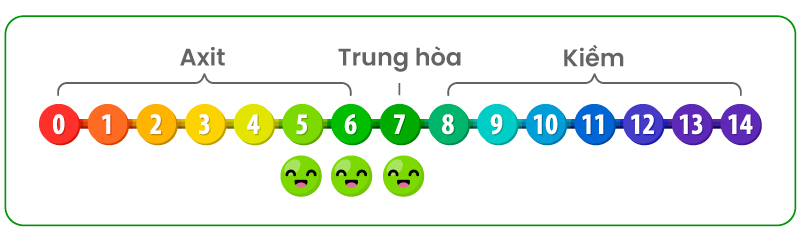
Anthurium plants thrive best in soil with a slightly acidic to neutral pH, around 5.5 - 6.5.
🌿 If the soil pH is too low (below 5.0), plants may have difficulty absorbing certain nutrients.
🌱 If the pH is too high (above 7.0), the plant may lack micronutrients such as iron and manganese, leading to yellowing of the leaves and green veins.
Pet-friendly
Anthurium (Flamingo Flower) is not friendly to pets (dogs, cats) and humans. If you plant the plant, you need to take careful measures to protect the plant. 🚧🐕🐈
💡 Additional notes:
💡 The phenomenon of "weeping" trees (guttation): Plants may secrete water droplets at the edges of leaves if air humidity is high or soil is too wet, this is a normal phenomenon, not a disease.
💡 Rotate the pot: Anthuriums tend to grow towards the light, so you should rotate the pot every 1-2 weeks to ensure balanced growth.
💡 Pests and diseases: Look for aphids (mealybugs, scale insects) and spider mites. If you see them, you can wipe the leaves with a diluted soap solution, alcohol, or neem oil.
💡 Breeding: Can be propagated by dust separator (with shrubby species) or cuttings (stem section with dormant buds and aerial roots if any).
💡 Old leaves or weak branches: You can cut off They allow the plant to concentrate its nutrients on new leaves.
💡 Repotting: Only repot when the roots have completely filled the old pot (usually every 1-2 years). or when The substrate is too old., rotten. Choose a pot that is slightly larger than the old pot.
Indoor Plant Care Guide
The most important and basic knowledge about growing plants indoors:
Content is subject to content moderation by Long Hồ – Founder, Senior Plant Copywriter, Gardener
Learn about Chính sách biên tập From KLA Garden. You can contact us to write articles or create content; payment will depend on the quality of your content. Contact Long Ho: hofilong@gmail.com.