Image source: Internet (Please contact us if you find any copyright infringement)
Luong bamboo (Dendrocalamus barbatus)
| Surname | Poaceae |
|---|---|
| Leaf color | xanh lá |
| Leaf shape | tapered |
| Leaf size | nhỏ |
| Roots & Tubers | turn the earth |
| Tăng trưởng | nhanh |
| Breeding | Tissue culture, cuttings, division |
| Diseases & Pests | Fungi, mealybugs, root rot |
Bamboo has a straight trunk, 12–20 m tall, with long and fairly uniform internodes. The bamboo trunk is slightly glossy green, with an average diameter of about 8–12 cm. The plant grows in large clumps with many trunks growing close together, and the dense foliage at the top forms soft clusters of leaves.
Note: The above information is only relative, the living conditions of the tree also depend a lot on other objective factors.
How to plant and care for Dendrocalamus barbatus bamboo.
Difficulty of growing Dendrocalamus barbatus bamboo
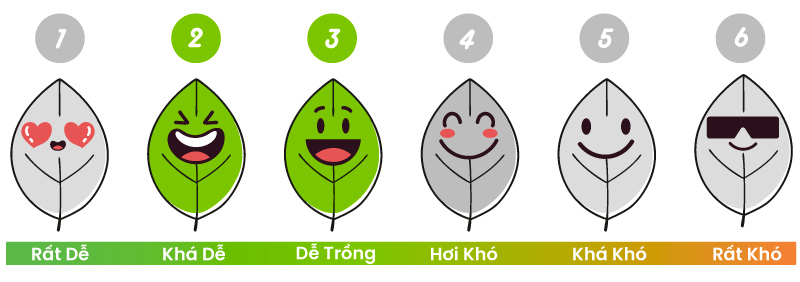
Difficulty: 3/6
Poaceae (Grass family) is one of the most common and easiest-to-grow plant families in the world. Most species are highly adaptable, fast-growing, and resistant to pests and diseases.
✅ Fast-growing and adapts well to many soil types.
✅ They tolerate sunlight well, and many species are quite drought-tolerant.
✅ The root system is well-developed, helping to retain soil and prevent erosion.
🚫 Some species grow very quickly and can be invasive if left unchecked.
🚫 Not suitable for prolonged waterlogging (most species are prone to root rot if submerged in water for extended periods).
Soil for growing bamboo (Dendrocalamus barbatus)

Poaceae thrive in loose, well-drained soil rich in organic matter. Most species in this family (bamboo, reeds, ornamental grasses, lemongrass, etc.) have a strong, fibrous root system, so the soil needs to be well-aerated to allow the roots to penetrate and spread. While many species can survive in nutrient-poor soil, plants will grow denser, healthier, and greener if planted in a humus-rich substrate with balanced moisture.
📌 Recommended potting mix (for pots or containers):
2 parts light loam or all-purpose potting soil.
1 part coarse sand, perlite, or pumice (helps improve drainage and aeration).
1 part well-rotted organic fertilizer, burnt rice husk, or coconut fiber (to retain moisture and add nutrients).
👉 You can add some finely chopped pine bark or clay pellets if growing bamboo in a large pot to increase the stability of the soil structure.
🚫 Avoid:
❌ Heavy clay retains water for a long time, causing root suffocation.
❌ Compacted soil and lack of oxygen hinder root development.
❌ The growing medium retains moisture for too long during the rainy season, easily causing root rot.
💡 Note:
The basin or tub must have good drainage holes and prevent water from accumulating at the bottom.
Do not plant the root collar too deep to avoid root rot.
Apply organic fertilizer or slow-release fertilizer every 4–8 weeks during the growing season to maintain green foliage and dense canopy.
For lawn grass, it's advisable to lightly till the surface soil periodically to prevent crusting and allow the roots to breathe better.
For bamboo or other species with strong rhizomes, the growing space should be controlled to limit unwanted spread.
Suitable light conditions for Asparagus Bamboo (Dendrocalamus asper)

🔆 Direct to partial strong sunlight
✅ Best: 6–8 hours of direct sunlight each day.
✅ Some ornamental grass species tolerate partial shade, but their colors will be paler and their stems weaker.
✅ Lack of light causes the plant to grow tall, with thin stems that are prone to falling over.
🚫 Planting in a place that is too dark will stunt the plant's growth and reduce its leaf density.
💡 Note:
Pale, weak leaves are a sign of insufficient sunlight.
Indoor grasses should be placed near a bright window or grown under LED grow lights for 10–12 hours per day.
📍 Ideal location:
Gardens, lawns, sunny balconies, outdoor flowerbeds.
The ideal temperature for Dendrocalamus barbatus bamboo.

🌿 Ideal temperature: 20 – 35°C
Most Poaceae species are warm-loving and tropical plants, but some temperate species can tolerate cold well.
✅ Grows vigorously in spring and summer.
✅ Many species can tolerate temperatures above 35°C if they have enough water.
✅ Some temperate varieties can tolerate mild cold temperatures of 5–10°C.
🚫 Prolonged frost can burn leaves or kill above-ground plants.
📍 Signs that plants are being affected by temperature:
🚫 Too cold: Leaves burn at the tips, turn yellow, and stop growing.
🚫 Too much heat + too little water: Leaves curl up, edges dry out, leaf density decreases.
Watering for bamboo (Dendrocalamus barbatus)

Poaceae prefer moderately moist soil but cannot tolerate prolonged waterlogging.
📌 Watering principles:
✅ Water when the topsoil is 2–4 cm dry.
✅ Water deeply so that the roots can grow deep into the soil.
✅ Increase watering during the growing season.
✅ Reduce watering when the weather is cold or the plants are growing slowly.
🚫 Avoid:
❌ Keep the soil constantly waterlogged.
❌ Watering too shallowly and too frequently causes the roots to develop shallowly.
📍 Reference frequency:
During hot season: 2–3 times/week (in pots), 1–2 times/week (in the ground).
Cold season: Once a week or when the soil is nearly dry.
📍 Signs of overwatering:
🚫 Yellow leaves from the base.
🚫 The roots are soft, rotten, and have an unpleasant odor.
Humidity requirements for Dendrocalamus barbatus bamboo.

🌿 Ideal humidity: 40–70%
Most species do not require particularly high humidity.
✅ Suitable for well-ventilated environments.
✅ Can withstand dry air for short periods.
✅ Frequent misting is not necessary (except for certain species).
🚫 Excessive humidity and lack of ventilation can easily lead to the growth of fungal diseases.
The ideal pH level for Dendrocalamus barbatus bamboo.

📌 Soil pH: 5.5 – 7.5 (slightly acidic to neutral)
🌿 pH too low (<5.0): Slow plant growth, weak roots.
🌱 pH too high (>8.0): Poor absorption of micronutrients, yellowing leaves.
💡 Tips for adjusting pH:
Add well-rotted compost if the soil is too alkaline.
Apply a low dose of dolomite lime if the soil is too acidic.
Pet-friendly
Most species in the Poaceae family are safe for dogs, cats, and humans.
✅ Non-toxic if in contact with or lightly chewed.
✅ Pets often eat grass to aid digestion.
However:
❌ Some species have sharp leaves that can scratch the mouth.
❌ Hay seeds can stick to pet fur.
🚧 Safety measures:
Regular pruning is necessary to prevent leaves from drying out and becoming sharp-edged.
Keep the planting area clean and prevent seeds from falling.
💡 Additional notes:
💡 Growth: Fast-growing, requires frequent trimming to maintain its shape.
💡 Flowering: The flowers are small, in the form of spikes or clusters, and are usually inconspicuous (except for ornamental grasses).
💡 Fertilizing: Prioritize organic fertilizers or balanced NPK; avoid excessive nitrogen which can soften leaves.
💡 Repotting: Once or twice a year for potted grass.
💡 Breeding: Mainly by seeds, division of clumps or rhizomes (depending on the species).
💡 Trimming: It helps the plant grow thicker and stimulates new shoots.
💡 Control spread: Some species have vigorous rhizomes, so they should be planted in pots with a border.

Indoor Plant Care Guide
The most important and basic knowledge about growing plants indoors:
Content is subject to content moderation by Long Hồ – Founder, Senior Plant Copywriter, Gardener
Learn about Chính sách biên tập From KLA Garden. You can contact us to write articles or create content; payment will depend on the quality of your content. Contact Long Ho: hofilong@gmail.com.