










Image source: Internet (Please contact us if you find any copyright infringement)
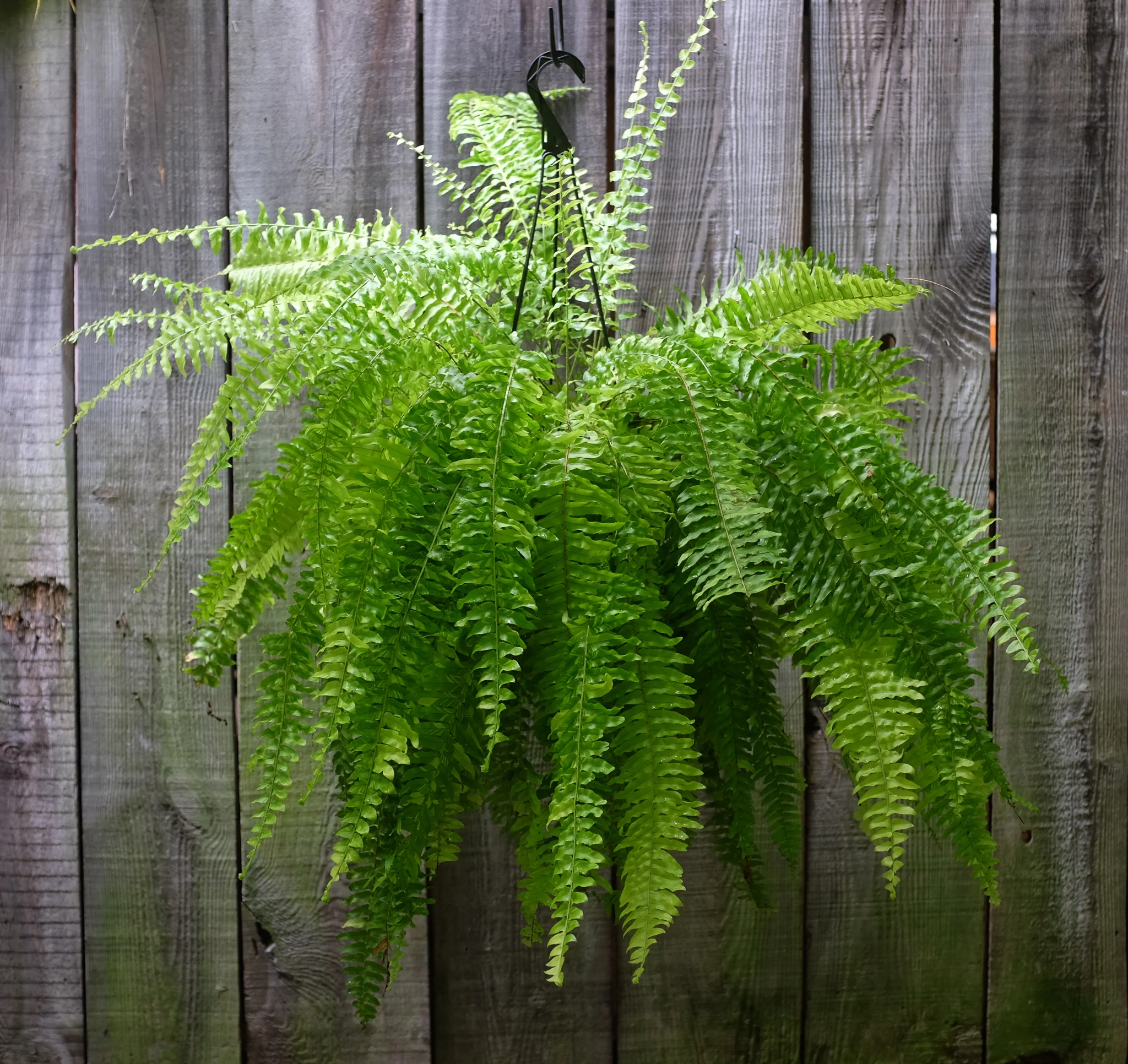
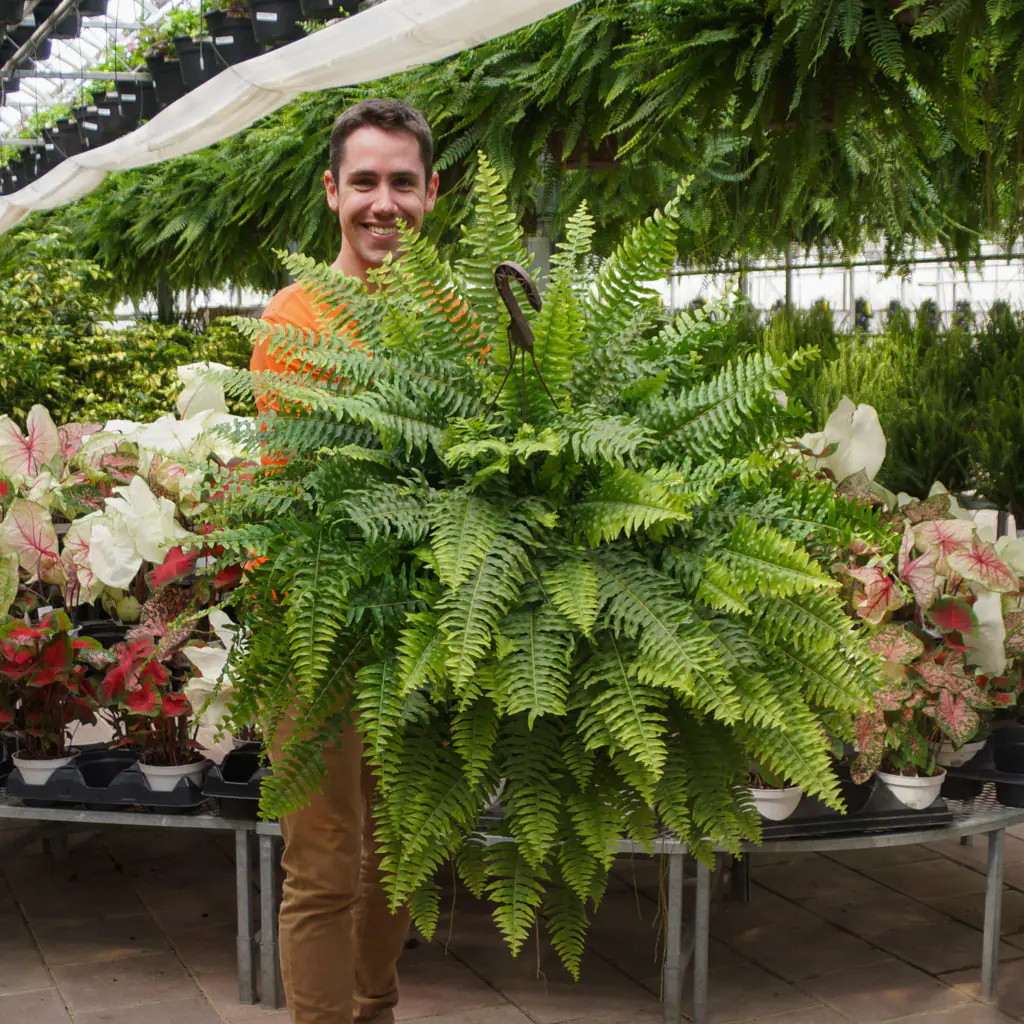
Boston fern (Nephrolepis exaltata)
| Surname | Polypodiaceae |
|---|---|
| Leaf color | silver green, green |
| Beard | drooping, large leaf blade |
| Leaf size | nhỏ-vừa |
| Tăng trưởng | nhanh |
| Breeding | spores, Spores develop in the branching lobes of the antennae |
| Diseases & Pests | spiders, aphids, root rot, leaf rot |
Note: The above information is only relative, the living conditions of the tree also depend a lot on other objective factors.
How to grow and care for Boston fern
Light

Boston fern sword fern likes bright indirect light.
Temperature

Water

Water a lot, but keep it airy. Avoid water stagnation which will cause root rot.
Humidity

The best humidity for Ficus reticulata is above 70%.
pH

Boston fern, ideal pH range is 5.0 - 7.0 pH.
Some characteristics of Boston fern
Leaves: Both fertile and sterile leaves are pinnate. There are numerous leaflets, or pinnae, measuring 40–100 mm (1.5–4 in) on each side of the leaf axis. Each pinnae is oblong, lanceolate, with an auricle overlapping the rachis.
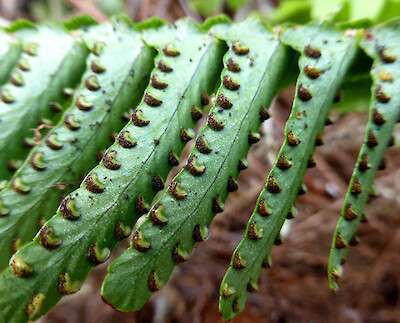
Roots: Orange/brown to light brown, straight scales with hairs similar to root tips. Stems are straw colored and produce small underground tubers. The presence of tubers distinguishes it from other Florida wood ferns.

Similar species - Fiddle Leaf Fern
The bonsai fern (Nephrolepis cordifolia) is very similar to the cultivated and introduced Boston fern (Nephrolepis exaltata). The two species can be distinguished by the following minor differences:
The sword fern (Nephrolepis cordifolia) has cotyledons with overlapping 'leaflets' (i.e. leaflets) at the base. Small flaps of tissue (i.e. indusia) cover its reproductive structures (i.e. sori) which are broadly kidney-shaped (i.e. reniform). It typically produces round, fleshy, underground tubers.
The Boston fern (Nephrolepis exaltata) has leaves with non-overlapping 'leaflets' (i.e. leaflets). The small flaps of tissue (i.e. indusia) covering its reproductive structures (i.e. sori) are roughly circular (i.e. near-orbital). It does not produce any underground tubers.
Picture of mature Boston fern

Indoor Plant Care Guide
The most important and basic knowledge about growing plants indoors:
Nội dung được kiểm duyệt nội dung bởi Long Hồ – Founder, Senior copywriter
Tìm hiểu về Chính sách biên tập của KLA. Bạn có thể liên hệ để viết bài, sáng tạo nội dung, nhuận bút tùy theo chất lượng nội dung.
See more
- All
- Agave (Thùa)
- Aglaonema (Ngọc ngân/vạn lộc)
- Alocasia (Môn ráy)
- Anthurium (Hồng môn)
- Aquatic plant
- Bambusoideae (Tre trúc)
- Begonia
- Cactus
- Calathea
- Cannaceae (Dong riềng)
- Colocasia
- Cycadaceae (Vạn tuế)
- Dieffenbachia (Vạn niên thanh)
- Dioscorea
- Epipremnum
- Fern
- Homalomena
- Monstera
- Other
- Palm
- Philodendron
- Platycerium
- Rhipsalis (Xương rồng tầm gửi)
- Sansevieria (Lưỡi hổ)
- Schismatophytes
- Strelitziaceae (Thiên điểu)
- Syngonium
- Tillandsia