How can we restore degraded land and rebuild its ecosystem?
KLA Garden provides services Indigenous ecological consulting and land reclamation Suitable for gardens, farms, resorts, homestays, landscaping projects, and land areas requiring soil health restoration.

Instead of simply replacing the soil or planting more trees, KLA Garden approaches the land as a living ecosystem, where soil, water, plants, microorganisms, and native organisms are interconnected.
The goal is to rebuild the foundation so that the land can:
- Retains water better
- Increase the organic matter content.
- Improve soil structure
- Increase biological activity
- Limit erosion
- Increase plant diversity
- Supporting biodiversity
- Reduce reliance on synthetic fertilizers and chemicals.
- Increased resilience to changing environmental conditions.
What is native ecology?
Native Ecology It is an approach based on plant species and their ecological relationships that are adapted to the natural conditions of a region.
Native landscape design is not simply about "planting lots of native trees.".
A native ecosystem might include:
Native plants + shrubs + ground cover + soil + water + microorganisms + insects + birds + other organisms.
These components form an interactive network that helps the ecosystem sustain and recover over time.
KLA Garden views the selection of native plants as part of an ecological strategy, not just an aesthetic choice.

Why are native trees important for sustainable landscapes?
Native plants have adapted to the natural conditions of the region, such as climate, soil, rainfall, and ecological relationships.
Under suitable conditions, prioritizing native plant species can help:
- Increase adaptability
- Supporting local biodiversity
- Reduce the need for care.
- Reduce irrigation requirements in some systems.
- Create habitats for local organisms.
- Creating an ecological identity for the landscape.
KLA Garden views native plants as part of the ecosystem, rather than just as decorative elements.
What is land reclamation?
Land reclamation is the process of restoring the physical, chemical, and biological properties of soil so that it can better support crops and ecosystems.
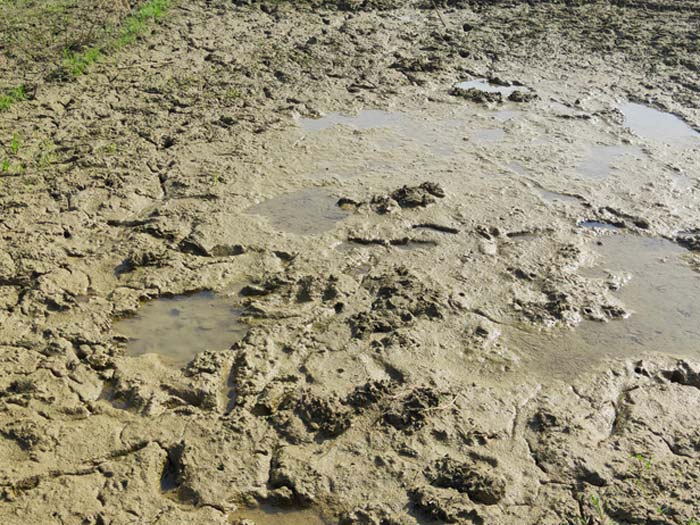
A plot of land in need of renovation can present many challenges:
- The soil is compacted.
- Soil poor in organic matter
- Poor water retention
- Drainage too fast or too slow
- Erosion
- Loss of topsoil
- Low microbial activity
- Residues from previous land use
Therefore, soil improvement should not be understood simply as "adding fertilizer".
The long-term goal is to rebuild a living soil It has better structure and biological activity.
What methods does KLA Garden use to improve the soil?
Depending on the soil conditions, KLA Garden can propose a combination of solutions.
Add organic matter
Compost, compost, and other suitable organic materials can be used to increase the soil's organic carbon supply.
Organic matter plays a crucial role in soil structure, water retention capacity, and the functioning of soil microorganisms.
Use organic mulch.
Mulch, or organic mulch, helps to:
- Reduce water evaporation
- Protect the soil surface.
- Reduce the impact of direct rainfall.
- Weed control
- Adds organic matter during decomposition.
This is one of the simple yet highly valuable solutions in ecological land management.
Encourage soil microorganisms
A healthy soil system is not just about minerals.
The land also contains a large community consisting of:
- Bacteria
- Mushroom
- Protozoa
- Nematodes
- Earthworms
- Other organic decomposers
KLA Garden prioritizes methods that create favorable conditions for soil microorganisms to thrive, rather than focusing solely on providing nutrients directly to the plants.

Reduce soil disturbance
Excessive tillage can disrupt soil structure and affect soil ecosystems.
When conditions permit, KLA Garden prioritizes methods that minimize soil disturbance and allow the soil ecosystem to gradually recover over time.
Plant cover crops
Ground cover plants help protect the soil surface from:
- Heavy rain
- Direct sunlight
- Wind
- Erosion
- Loss of moisture
At the same time, the living plant layer also creates additional biomass and habitat for other organisms.
How is soil restoration different from soil replacement?
Soil replacement involves introducing new materials or soil into an area. Soil restoration is about improving the soil system's self-sustaining capacity.
In many cases, replacing the entire soil is not the optimal or necessary solution.
If the existing soil still has the potential to recover, KLA Garden prioritizes:
Improved structure → increased organic matter → restored biological activity → increased coverage → reduced disturbance.
This approach focuses on nurturing the soil rather than simply replacing it.
How can you tell if a plot of land needs renovation?
You shouldn't just judge a plant based on whether it's green or yellow. KLA Garden evaluates many factors:
Land
- Structure
- Compression
- Drainage
- Moisture retention
- Organic matter content
- pH as needed
- Signs of biological activity
Plants
- Tree density
- Growth potential
- Signs of malnutrition
- Pests and diseases
- Natural regeneration
Water
- Water source
- Flow
- Flooding point
- Water permeability
- Erosion
Ecosystem
- Existing native trees
- Insect
- Bird
- Small animals
- decomposers
Therefore, KLA Garden develops a suitable renovation plan instead of applying the same formula to every plot of land.
KLA Garden's Native Ecology & Soil Improvement Process
Step 1 — Survey the site
Assess the topography, soil, water, light, existing vegetation, and other factors impacting the ecosystem.
Step 2 — Identify the problem
Identify key issues such as:
Poor soil → soil compaction → water scarcity → erosion → loss of vegetation → decline in biodiversity.
Step 3 — Building the target ecosystem
Determine the best direction for development on the land:
- Ecological garden
- Native Landscape
- Agroforestry
- Restoration garden
- Resort landscape
- Regenerative agriculture
- Biodiversity space
Step 4 — Soil Restoration
Depending on the situation, solutions may include:
- Compost
- Organic matter
- Mulch
- Ground cover
- Improve drainage
- Reduce soil compaction.
- Increase biological activity
Step 5 — Restoring vegetation
Select and arrange plant species that are suitable for the ecological conditions, prioritizing native or well-adapted vegetation.
Step 6 — Monitor and Adjust
Ecosystems need time. KLA Garden can monitor indicators such as plant growth, canopy cover, soil condition, water retention capacity, and the re-emergence of organisms in the ecosystem.
Does KLA Garden offer consulting services for the Agroforestry model?
Have.
Agroforestry Landscape – integrated agricultural and forestry landscape It is an approach that integrates trees, agricultural crops, vegetation, and ecological components within a single system.
This model can contribute to:
- Increase biodiversity
- Improve soil health
- Increases water retention capacity
- Reduce erosion
- Microclimate control
- Integrating ecological value with production.
This is also one of the directions KLA Garden is researching within its content ecosystem on sustainable landscaping and agriculture.

What types of land plots is this service suitable for?
KLA Garden can provide consultation for:
Agricultural land
Long-term cultivated land, degraded soil, or areas requiring conversion to more ecological farming methods.
Farm and garden
The gardens aim to reduce reliance on chemicals and enhance the naturalness of the ecosystem.
Resort and homestay
The projects aim to create landscapes that reflect local identity and enhance the value of the natural experience.
Vacant land or degraded land
The land areas require vegetation restoration and soil quality improvement before development can begin.
Ecological landscape project
These projects aim to integrate landscape, plant conservation, and biodiversity.
Land use conversion area
These areas require a reassessment of the soil, vegetation, and ecosystems before a new project can be implemented.
Can soil improvement help reduce fertilizer needs?
Possibly, but the extent depends on soil conditions and cropping systems.
The goal of soil improvement is not to completely eliminate the need for nutrient supplementation, but rather to help the soil retain and cycle nutrients more effectively.
When soil has good structure and suitable biological activity, plants can use resources more efficiently.
Therefore, KLA Garden prioritizes this mindset:
Nourishing the soil → nourishing the soil ecosystem → nourishing the plants
instead of just:
Fertilizing → plants grow.
What does a healthy ecosystem look like?
A healthy ecosystem doesn't necessarily have to be as clean and uniform as a regularly manicured garden.
It may have:
- Dried leaves
- Mulch
- The plant grows in multiple layers.
- Insect
- Mushroom
- Earthworms
- Bird
- Native trees
- Areas with varying humidity levels
These seemingly "imperfect" factors can play a crucial role in the material cycle and biodiversity.
What approach does KLA Garden take to land reclamation?
KLA Garden adheres to the following principles:
- Understand the land before you start improving it.
- Understand water before you water it.
- Understand the ecosystem before planting trees.
- Prioritize repair before replacement.
- Prioritize biological methods before using chemicals.
- Prioritize suitable plants before choosing aesthetically pleasing ones.
This is the foundation for building an ecosystem capable of long-term development instead of constantly depending on human intervention.
Do you have a plot of land that needs restoration?
If the land is experiencing problems with soil, crops, water, or biodiversity, KLA Garden can begin with an ecological status assessment.
From there, we developed a suitable plan for:
Healthier soil → Healthier plants → More diverse ecosystems → More sustainable landscapes.
Contact KLA Garden via email for advice on native ecology and soil improvement. info@kla.vn.