Image source: Internet (Please contact us if you find any copyright infringement)
Agave lophantha / Agave univittata (Centrifuge)
| Surname | Asparagaceae |
|---|---|
| Leaf color | Dark green with a yellowish-brown stripe in the middle. |
| Leaf shape | Sword-shaped, narrow, with small serrations along the edges of the leaves. |
| Leaf size | average (approximately 15-25cm long) |
| Close | very short stem (rose-shaped) |
| Tăng trưởng | trung bình |
| Breeding | Separate the seedlings from the base. |
| Diseases & Pests | Red spider mites, mealybugs, root rot due to excess water. |
Agave lophantha This succulent plant makes a striking impression with its lemon-yellow or light green stripe running down the center of its leaves, contrasting beautifully against a dark green background. With its perfectly symmetrical, rounded shape and small serrated edges, the plant possesses a modern, robust beauty. It's an excellent choice for dry garden designs (xeriscaping), balcony decoration, or as a potted plant for your desk, thanks to its excellent drought tolerance and low maintenance requirements.
Note: The above information is only relative, the living conditions of the tree also depend a lot on other objective factors.
How to grow and care for Agave Iopphantha
Difficulty of growing Agave Iophantha (Central-striped Agave)

Difficulty: 2-3/6
Agave is suitable for people with little experience because:
✅ Extremely drought-tolerant, requires infrequent watering.
✅ Easily adapts to hot, dry climates
✅ Can be grown directly outdoors or in pots
✅ Resistant to pests and diseases, requires no elaborate care.
Soil for growing Agave Iophantha (Central-striped Agave)
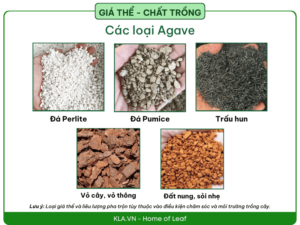
Agave Iophantha (Central-striped agave) is a succulent that prefers dry, well-drained soil that doesn't retain moisture for long periods. The plant will suffer from root rot if the soil is waterlogged.
📌 Recommended soil formula: ✅ 2 parts coarse sandy soil (or cactus potting soil)
✅ A portion of perlite or pumice stone helps with quick drainage.
✅ 1 part dried coconut fiber or decaying bark
🚫 Do not use loamy soil, damp humus soil, or clay that retains water for a long time.
💡 Note:
- If you're growing agave in a pot, make sure there are drainage holes at the bottom of the pot.
- You can cover the soil with gravel or pebbles to keep the root collar dry.
Suitable lighting for Agave Iophantha (Central-striped Agave)

📌 Lighting details:
✅ Best: Plant in a location with 6–10 hours of direct sunlight per day – ideally a rooftop, garden, or south/west-facing balcony.
✅ Tolerant: Partial light for short periods, but the plant will grow more slowly and the leaves will be paler.
🚫 Absolutely avoid: Planted indoors with little light or in a closed room without supporting lights - the plant will weaken, the stem and leaves will be soft and easy to rot.
💡 Special Note:
-
If the new leaves are small, misshapen, or deformed, the plant may be lacking sunlight.
-
If you must place the plant in a dimly lit area (such as a windowless room), you can use LED grow lights placed about 30–40 cm away from the plant and illuminated for 10–12 hours each day.
📍 Ideal location in the house:
-
There are light curtains or light-filtering screens near the windows.
-
If the window faces south, place the plant about 1–1.5 meters away from the window or use curtains to diffuse the light.
-
Do not place near hot light sources (such as halogen bulbs) that cause heat.
The ideal temperature for Agave Iophantha (Central-striped Agave) plants.

🌿 Ideal temperature for Agave iophantha (Central-striped Agave): 20 - 35°C
📌 Characteristic:
- Native to Mexico and arid regions of South America, Agave Iophantha prefers high temperatures and intense sunlight.
- Can tolerate short periods of mild cold if soil is dry.
🚫 Below 5°C: Plants may suffer from heat shock, leaves become soft, turn brown, and rot easily.
🚫 Above 40°C (Strong sunlight without ventilation) can burn the outer leaves.
Note:
✅ In winter, avoid watering or water very sparingly.
✅ Elevate the pot and protect it from direct rain and cold if planting outdoors.
✅ Avoid cold drafts at night.
Watering Agave Iophantha (Central-striped Agave) plants

Agave iophantha (Central-striped agave) is a succulent plant., extremely water-saving.
📌 Watering principles:
✅ Only water when the soil is completely dry.
✅ Water thoroughly and allow the soil to dry completely before watering again.
✅ During hot season: Water once every 7–10 days if grown in pots, once every 1–2 weeks if grown outdoors.
✅ Cold season: Water once every 3–4 weeks, or stop watering completely if the temperature is below 15°C.
🚫 Avoid overwatering – signs include: wilted leaves, root rot, and a slight odor.
🚫 Do not mist or water the leaves – this can easily cause sunburn or fungal diseases.
Humidity requirements for Agave Iophantha (Central-striped Agave) plants.

📌 This plant thrives in dry environments with low humidity, ranging from 30–50°C.
✅ No artificial humidification required
✅ Avoid planting in areas with high humidity, such as near fish ponds or humid greenhouses.
🚫 Prolonged humidity above 70% can easily cause root rot and leaf mold.
The ideal pH level for Agave Iophantha (Central-striped Agave) plants.

📌 Suitable soil pH: 6.0 – 7.5 (slightly acidic to neutral)
✅ The plant tolerates slightly alkaline soil (up to 8.0) but will absorb nutrients better in the range of 6.2 – 7.0.
✅ If the pH is too low (<5.5): the plant grows slowly, and the leaf edges wilt slightly.
✅ If the pH is too high (>8): iron deficiency is likely, causing yellowing of young leaves.
💡 Care tips:
- A little dolomite lime can be added to adjust the pH if the soil is too acidic.
- Check soil pH every 1–2 months with a simple home test kit
Pet-friendly

Agave iophantha contains needle-shaped calcium oxalate crystals – a compound that causes severe irritation in the mouth, throat, and digestive system of dogs, cats, and other pets if they chew on the leaves or stems.
⚠️ Symptoms if your pet ingests this:
-
Drooling, vomiting, difficulty swallowing
-
Mouth swelling, sore tongue, may bleed slightly
-
Loss of appetite for several hours to several days
🚧 Preventive measures:
-
Place the plant high up, out of reach of pets.
-
Use a cage, screen or anti-bite spray if you have curious cats or dogs.
💡 Additional notes for growers of Agave Iophantha (Central-striped Agave):
💡 The tree can live for 10–20 years before flowering only once, after which it dies (but leaves many saplings at the base).
💡 When the flowers appear, it can grow up to 4–5m tall – it needs plenty of space to thrive.
💡 It can be propagated from seedlings growing at the base, and they are very easy to separate and plant individually.
💡 Wear gloves when handling leaves – the edges have sharp thorns that can scratch your skin.
💡 Plant in a well-ventilated area, avoiding places prone to flooding or prolonged rain.

Indoor Plant Care Guide
The most important and basic knowledge about growing plants indoors:
Content is subject to content moderation by Long Hồ – Founder, Senior Plant Copywriter, Gardener
Learn about Chính sách biên tập From KLA Garden. You can contact us to write articles or create content; payment will depend on the quality of your content. Contact Long Ho: hofilong@gmail.com.